Thoughts

  • You Can’t Rush Results

    My wife is a nurse and had to work this past weekend, which put me on dad duty.

    For lunch, we usually have Uncrustables or chicken nuggets. But for dinner, I decided to cook chicken cutlets, the way my mom used to make.

    I started heating two pans on high — the Always Pan (which is amazing), and an old iron sauté pan. I added a generous amount of oil to both (hot oil is the key here).

    Then I started prepping the chicken, beat the eggs and poured the breadcrumbs.

    Except what I didn’t realize was the iron pan heated way faster than the Always Pan, which is what I usually use.

    I turn around to see smoke billowing out of the iron pan as the oil burned off.

    I opened the windows, turn on the stove fan, and the ceiling fan, and sent the kids outside.

    It was too late though. All of smoke alarms on the main floor went off.

    My fatal mistake? I assumed “hotter” meant cooking faster.

    But that is seldom the case. Instead, I made a bigger mess, and almost burnt the cutlets to boot.

    They were still mad good though.

    See, I tried to rush the results by rushing the process. But most things take time.

    It’s as true in cooking as it is in automation.

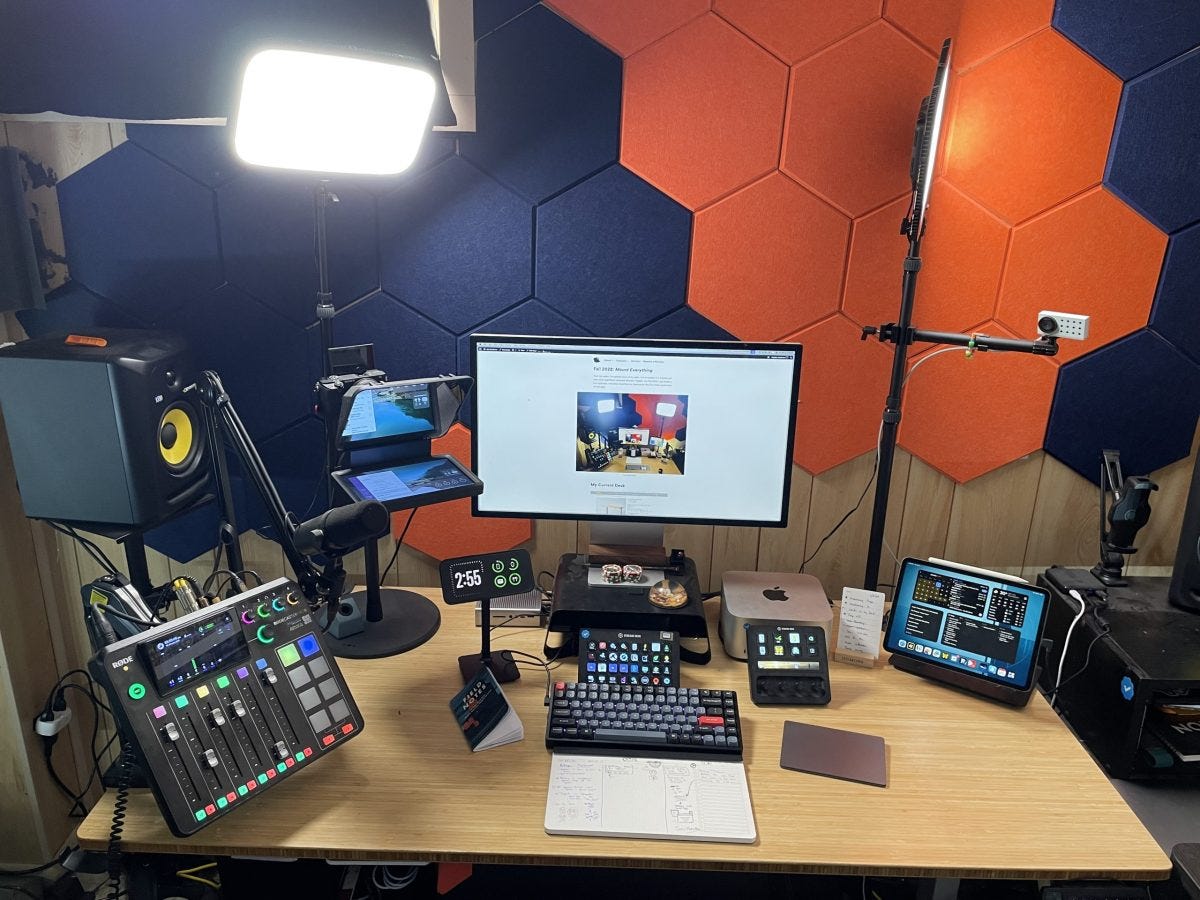
    On Saturday, I told you about my latest desk setup — while simultaneously stressing that this was an incremental build over years.

    When you start automating, it’s the same. On the latest episode of Streamlined Solopreneur, I talk to mom and business owner Kim Caloca-Madden about this very thing: begin by automating simple, repetitive tasks that consume time.

    Examples include task management, calendar synchronization, and email responses.

    By starting small and taking little things off your plate, you can start to see gains, create more space in your schedule, and learn what’s possible.

    My challenge for you: Think about an easily repeatable task that you might be able to take off your plate.

    And if you want to learn more, listen to my interview with Kim Caloca-Madden.

  • I Should Have Stuck with Readwise Reader

    Subtitle: Omnivore Closing: Inherent Risk of Open Source Software

    Earlier this year I fell victim to the allure of switching from a paid tool to free, open source tool. I switched from Readwise Reader (herein, Reader) to Omnivore.

    I figured they were similar enough (though I always maintained Reader is better and I’d just “get used to” Omnivore), and the truth is I don’t make heavy use of my RSS reader.

    But earlier this week, Omnivore announced they were acquired by ElevenLabs, and while they didn’t explicitly say it, they’re shutting down the hosted service to focus on ElevenReader.

    While they say they remain committed to the “Developer community” and Omnivore will remain 100% open source, this exposes a considerable risk for anyone who doesn’t want to fork (copy) and maintain their own version of all of their favorite software: Free, Open Source Software is risky business.

    Sure there are some successful projects — though one of the biggest is currently embroiled in a lot of drama at the hands of a capricious and litigious leader — but most can’t answer a simple but crucial question.

  • Our Childhood Home Has New Owners

    After celebrating a fantastic birthday on Sunday, I took a trip to New York, where my brothers and I moved our parents out of our childhood home.

    We had a lot of good times in the 32+ years we spent there. 

    It was the lynchpin of family parties. Some of my fondest memories are from Christmas. Both sides would come over for a full day of food and festivities.

    There was one Christmas — I was probably 9 — where my brother Phil and I slept in the Living Room, next to the tree. Whoever put the gifts under it did it without waking us up.

    We have life-long friends in our neighbors. People I still think about today.

    We used to play baseball in the front yard. As we got older, our next door neighbors, Mr. and Mrs. Davis*, would let us extend the field into their yard. They didn’t care that we pelted the side of their house with tennis balls.

    I remember that every time I see kids playing in our neighborhood.

    My friend Matt introduced me to Star Wars. My brothers and all of the kids our age would play manhunt throughout the entire neighborhood. We’d go back into the woods and play paintball.

    That house has seen so much fun, joy, sorrow, and everything in between.

    I don’t often post things like this, but I’d be remiss if I didn’t say anything about the house I grew up in.

    My brothers and I had an incredible childhood. That house and our parents gave it to us. ??

    I’m going to miss it dearly. I hope the next family loves it just as much as we did.

    Our last family photo there. Sadly my brother Mikey couldn’t make the trip.
  • Since the Last Time the Yankees Made it to the World Series…(2024)

    A lot of my friends would describe me as a die hard Yankee fan. I try to watch every single pitch of the 162 game season, and I live for the playoffs.

    Growing up in the 1990s, I got spoiled. They won the World Series 4 times during my most formative years.

    It’s been 15 years since the Yankees made it the World Series — and a lot has happened. I:

    • Started a left the 2 jobs I had where I wasn’t self-employed
    • Met, started dating, and married Erin (Erin was floored that the Yankees have never made it to the WS since we met each other)
    • Moved 5 times
    • Bought our first house
    • Had 3 kids
    • Started all of my podcasts
    • Stopped doing web development and coach people now
    • Watched the Giants win their most recent Super Bowl
    • Ran* 2 half marathons and a 10K
    • Wrote 5 books
    • Started smoking cigars

    …and my parents sold our childhood home. Before the World Series start, my brothers and I are helping them move out, and into their new house in upstate NY.

    I try to be honest with myself in these posts — and if I’m being honest, it’s been a tough couple of months.

    One of the reasons I love baseball is that it’s an escape. And while I don’t think anyone who’s seen my watch baseball would say it relaxes me, it’s something I can really get into for 3-4 hours.

    I’m so excited to see this team in the World Series. Whether it’s against the Mets, in Subway Series 2.0**, or the Dodgers, whom they’ve seen 11 times in the World Series but not since 1981*** — I can’t wait for some incredible, late October baseball.

    *Ran is generous. I participated in and completed 2 half marathons and a 10K
    **The Yankees won the last time, in 2000.
    ***They lost that one, and it started the last 15 year WS drought

  • See You at Podcast Movement!

    The last few years, I’ve skipped out on Podcast Movement, and last year I had pretty hardcore FOMO.

    So I decided this year I wouldn’t make the same mistake (it being geographically close made the decision much easier).

    This week I’m heading down to DC for a week of podcasting talk and events and I couldn’t be more excited.

    If you’re going to be there, I’d love to say hello! There are a few ways to connect:

    • I’ll be around, wearing my yellow Streamlined Solopreneur hat — so keep an eye out!
    • I’m also doing a number of Brain Dates about automation. If one fills up, don’t worry! I’ll be adding more.
    • You can also send me a DM on the PM app, Twitter, or LinkedIn. I’ll have them all installed on my phone, push notifications on!

    My goal is to learn as much as I can about where podcasters spend too much time. And of-course meet awesome people.

    But there’s also a late-breaking development on something I’ve been thinking about regarding podcast-specific communities.

    There are lots of tools for this, including a new one I was excited about (I’m less excited now for reasons I may explain at some point). But nothing has really caught on.

    So as I noodle on this, I’ll be talking to podcasters about that too.

    If you’re not going to be there, don’t fret. I’m going to publish as regularly as I can over on the Podcast Workflows podcast feed. Listen and subscribe here.

    One last thing — my latest episode of the podcast is a new installment in the 3 Things series: 3 Things I’m Struggling with for This Podcast.

    It’s a good bit of introspection and I think you’ll enjoy it!

    Listen Here

  • You Must Value Your Time

    “Why would you pay someone when you can do it yourself?”

    People have said that to me about hiring:

    • Lawn mowers/landscapers
    • Movers
    • House cleaners

    As well as as:

    • Paying for software (back in my development says)
    • Having appliances delivered and installed

    Yet, all of these businesses exist — and it’s not because their clients are exclusively people who can’t do it themselves.

    It’s because their clients, like myself, value their time.

    And you probably do too.

    I recently have a presentation where I said:

    If you’re copying and pasting from one app to another, that’s a perfect candidate for automation.

    So when I saw someone in the comments of a recent presentation I did talking about how, “that’s easy and not worth the endless subscriptions,” I thought, “This person don’t think their time is worth $10/month.”

    That means I can’t help them. Because the truth is, it’s NOT just about copying and pasting — something you and I do every day.

    It’s actually about two separate but important distinctions:

    First, when you’re copying and pasting from one app (say, Calendly) to another (say, Notion), you have to open Calendly, copy the text, then open Notion, find the place where you want to paste the text, and paste it.

    Then make sure the paste is correct. This could take several minutes per copy and paste. And that doesn’t count the mental energy it takes to switch to and from this menial task.

    And second, you need to remember to do the copy and paste. If you don’t do it, it doesn’t matter how easy it is. And when you forget, that’s when your process falls apart and important things slip through the cracks.

    Is remembering you have a podcast interview worth $10/mo?

    What about remembering to follow up with a potential client from your CRM?

    I bet they both are.

    Hiring someone to mow my lawn isn’t about the physical act of mowing. It’s about the fact that I never have to worry about mowing my lawn.

    That frees my brain up to think about more important problems.

    Automation is the same.

    With automation, you don’t have to worry about making sure data gets from A -> B, or that you might forget to do something…or that you need to take 15 minutes out of your day to do something simple.

    It’s about creating the margin and freedom in your schedule to do the most impactful work you can — for your podcast, and your business.

    And that is well worth the “endless” subscriptions.

  • I Love Career Day

    One of the ways I’d like to think I make an impact is being involved in my kids’ lives, and kids’ lives in general.

    I’m happy to volunteer my time for school functions and events for both my high school, and college alma maters.

    In fact, it’s highly valuable to me. It’s the ability to talk to and learn from younger generations.

    So I was pretty excited to learn from 1st-8th graders about how they perceive my career as a podcaster, YouTuber, and online business owner.

    Oh, and I brought a green screen (shout out to eCamm Live for making this super easy):

    I had SO much fun interacting with the kids, seeing their interests, and watching them freak out when they actually stood in front of the green screen.

    I also got to observe how they interacted with other professions. My wife Erin is a nurse, and her booth was right next to mine.

  • What I Learned from BJ Novak at CEX

    The closing keynote at CEX last week was an interview with BJ Novak, who you may know as Ryan from The Office. I personally liked him a lot as Bob Sherman in Saving Mr. Banks though.

    Throughout the interview (conducted by Anne Handley!), he shared stories of how he got his start, his own creator journey, and some good lessons he picked up along the way. I thought I’d share my favorite lessons as they relate to podcasting:

    “If you can talk, you can write.”

    BJ said one of his writing teachers said this, and I think it’s a great lesson for podcasters. Writing is crucial no matter what profession you’re in, and if you spend your time articulating ideas on a podcast, you can convert that into written word.

    “I can’t recommend my path. It’s a weird…make your own path.”

    I love this because while it’s good to borrow ideas, I think we look at very successful people (like Joe Rogan or Alex Cooper) and try to copy them. But we aren’t them, and we need to forge our own path.

    Separate inspiration from execution.

    BJ said he carries a notebook everywhere, observes things, and writes them down (while asking, “why”). This process is totally different from the writing process for him.

    When seeking inspiration for episodes or other content, you don’t need to immediately apply it to your show. Just write down interesting things and let them cook. Have a completely separate process for review.

    Focus on your audience. Have a good sense of them. Everything else can be backfilled.

    The most important takeaway (and why I push podcast mission statements so hard). If you know your audience, you can focus on helping them. (A) Know their problem, (B) know the solution. Then fill in the path from (A) to (B) with stories and actionable advice.

    I’m still more or less processing CEX, and my head in spinning (not literally) from the great sessions and all the fantastic people I got to meet. But these lessons from BJ Novak are definitely worth sharing.

  • Accidental Coaching on Storytelling

    In last week’s members-only episode of How I Built It, I end up accidentally coaching my guest, Tanya, for 20 minutes on storytelling. It’s a really good conversation about what makes a good story — ?become a member if you want to hear it?.

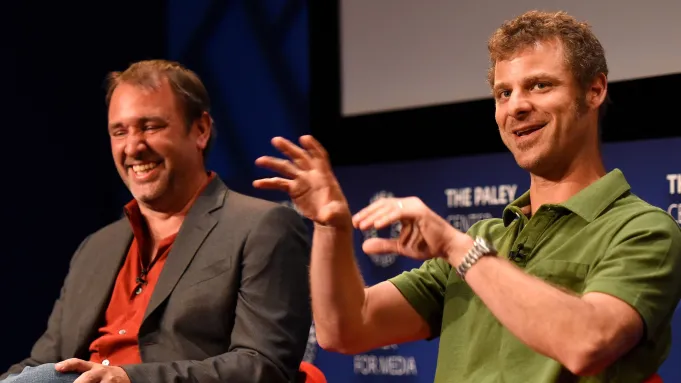
    One thing I mentioned to her later — when she was trying to figure out her story — was something Trey Parker and Matt Stone (the guys who created South Park) said about storytelling.

    Most people just tell their story as a series of events, almost like a kid telling you about their day. “I needed money, then I started a business and got my first client. Then I got more.”

    There’s no emotional charge in those sentences. Why did you need money? How did you get that first client? Instead, Parker and Stone recommend this:

    ? Don’t connect story beats with “and then” — you’re just listing a series of seemingly unconnected events.

    ? Connect story beats with “but” or “therefore” — now you’re connecting them with purposed.

    Here’s that first story again, with connected story beats: “I knew if I was going to provide for my family, I’d need something more than this dead-end job, therefore I started a business. I was really struggling to find my niche, but someone reached out to me and asked a crystalizing question that made my niche clear — that’s when I got my first client. We had a great relationship, I was really able to deliver for her, and she provided a great testimonial. Therefore, I was able to get more clients in that niche. Now, my business is thriving, and I’ve tripled what I was making at that dead-end job.”

    This also fits perfectly into 3-Act structure:

    1. Setup (I needed to provide for my family)
    2. Confrontation (I was struggling to get clients)
    3. Resolution (I’ve tripled my salary).

    As you creator your content (through writing, podcasting, or even guesting), you should consider the stories you’re telling. How do they connect back to your point, and are you taking the audience on a journey with you?

    That’s how your stories will stick, and people will remember what you had to say.