Thoughts

  • Vision, Workflow, Purpose: Lessons from Watching 13 Movies in 4 Days

    When I was a kid, the flu hit me extraordinarily hard. I was down for 2 weeks. I couldn’t eat. I slept poorly. I got way behind on school work.

    I did lose like 15 pounds, though.

    Due to diligently getting my flu vaccine every year since, I haven’t really gotten the flu, let alone as bad as I did.

    Until last week.

    The flu is going around the county, including at my kids’ school. So when my daughter came home with a 103°F fever, I knew it was only a matter of time for me.

    By Thursday, I was feeling pretty rotten; rotten enough to go to urgent care over the weekend for fear of pneumonia or something worse.

    Thankfully, it was “just” the flu.

    So I had a lot of time on my hands. And I decided to watch a bunch of movies — 13, to be exact.

    • The Original Star Wars Trilogy
    • The Star Wars Prequel Trilogy
    • Every movie featuring Chris Evans’ Captain America (The first Captain America Trilogy, plus the first four Avengers movies).
  • We Create Our Own Friction

    I’m working on a new and improved Substack experiment – I’m consistently being called back to that platform and think it could be a good secondary way to build an audience. 

    I started thinking about what I could name it, and was asking a friend what they thought about a new name. This was their feedback: 

    They were 100% right. Instead of just doing what worked, setting up the Substack and adding in some content, I spent too much time on the stuff that didn’t matter (or make sense). 

    I’m constantly thinking about how I can improve my processes and automations to reduce friction, so I can spend my time wisely. 

    And then I get caught doing this.

    Here’s the thing I keep coming back to: we create our own friction

    I’m grateful that my friend was able to give me this sort of direct feedback – everyone needs people like that in their lives. 

    You might think that I’m going to tell you how to prevent yourself from getting in your own way, and creating friction when you don’t have to. 

    I’m not. Because we’re all going to do it. 

    Like I said, it’s unavoidable. We’re going to procrastinate or work on the “fun, optional” part of a project before the necessary part. 

    But we’re also going to get sick, or our kids will get sick. There will be days when we’re not “feeling” it. 

    We put systems in place, we create processes, and we automate to reduce friction in other areas of our lives to give us the space for the unavoidable frictions – whether they’re self-imposed or not. 

    The best thing we can do is be mindful of our actions, have some good friends who will tell us the truth, and build systems that give us grace for the friction we can’t avoid.

  • My Thoughts on The Anxious Generation

    Lately I’ve been thinking about how fondly I look back on my formative years.

    I’d have fun at school and extracurricular activities, then go home and play outside for a bit, do my homework, and enjoy some TV time (and I’d sketch) before bed.

    During the summer, my brothers and I would do things like swim or play paintball during the day, and play neighborhood-wide manhunt at night.

    But my favorite activity was baseball.

    We’d use our neighbor’s driveway as the home run boundary. When we routinely started hitting home runs, Mr. and Mrs. Davis graciously let us use their yard too, effectively doubling the size of Casabona Park. Here’s my last look of the field, before we moved my parents out:

  • Where is your focus?

    For a while, it was pure chaos on the days I picked up my kids from school and daycare.

    We’d come home. They’d have a ton of energy. And I would:

    1. Listen to a podcast
    2. Cook dinner
    3. Wrap up whatever loose thread I had at work
    4. Parent my 3 small kids

    If you’re thinking I was ineffective with most of those, you’re right.

    I barely heard the podcast. I’d set off the smoke alarm. I wouldn’t so much work as stare at my laptop. And I’d snap at my kids for being kids.

  • What Solopreneurs Can Learn from 50 Years of SNL

    This weekend marked SNL’s 50th Anniversary, and if you’re a fan, you haven’t been short on behind-the-scenes content.

    On top of all the extra YouTube videos, interviews, and events, there’s a 4-part documentary on Peacock called SNL50: Beyond Saturday Night. The entire series is fascinating and covers: 

    1. The 5-minute audition to become a cast member
    2. The most popular sketch of all time, More Cowbell
    3. The writing process
    4. The “weird” year, Season 11

    Episode 4, about SNL’s ‘weird year,’ really hit home for me—I feel like Streamlined Solopreneur is in its own version of that right now.

    If you’re unfamiliar with Season 11 of SNL, there are a few important aspects: 

    1. They didn’t bring back the Season 10 cast, which had some heavy hitters, like Billy Crystal and Martin Short. 
    2. They instead decided to bring in new writers, producers, and a very young, inexperienced cast. 
    3. Lorne Michaels, who left the show 5 years prior, came back. 

    They sensed the show was on a downswing, and wanted to shake things up a bit. 

    Streamlined Solopreneur is almost 9 years old. Last year I finally rebranded it to reflect the move from web development to automation and helping solopreneurs. 

    But much like SNL in Season 11, I didn’t fully commit to anything — I just changed a bunch of stuff. 

    At the end of Season 11, the show was nearly cancelled. But NBC decided to give Lorne one more chance. 

    So they kept just a handful of cast members, including Jon Lovitz, who turned out to be the “breakout” star (insofar as a fledgeling show can have a breakout star). 

    They brought in experienced comedians, some of whom Jon knew he worked well with (like Phil Hartman). They brought in experienced writers. 

    And that led to a great run with some of the funniest cast members ever, including my favorite, Dana Carvey. 

    The feeling I got from the documentary was they had to go through Season 11 to reset, and figure out what truly worked. 

    Since then, Lorne and NBC have built a well-oiled machine. Episode 3, about the writers, shows that. They have an amazing system for getting the show to air smoothly. 

    The remarkable process of finding and onboarding cast members helps. 

    Did you know they make a mold of every cast member’s head on their first day? This allows them to do “hair and makeup stuff” without physically needing the actor. 

    That’s not something you just know. It’s something you learn over time.

    50 years is a really long time. And while the show had its dips, it’s a cultural phenomenon, an astounding feat to see come together. 

    My podcast might be in its own, “Season 11” right now. But much like SNL, I need to persevere. Like the Season 11 cast and writers, I need to try things to see what works and what doesn’t. 

    And like SNL, solopreneurs must learn, adapt, and build systems that last. That’s how we stay in the game for the long haul. After all, there’s a reason SNL has survived this long.
  • 20 Years of Casabona.org

    It’s hard to believe that 20 years ago, I was sitting in my Sophomore year dorm room at The University of Scranton (Redington Hall, bay bay!) when I bought this domain.

    And naturally because I was 19 years old, I didn’t keep some record of why I made the decision. I did “officially” announce it 6 months later.

    I suspect part of it was because I owned domains with words like “sugarbob” (a Homestar Runner reference) and “Joey.” If I was going to be taken seriously, I should have a professional-looking domain.

    While I wanted casabona.com, that was registered 8 years prior by a woman named Helen, who still owns and operates it to this day.

    I’ve tried many times to purchase it from her, but now I’m excited to see it hit 30.

    In any case, I got the .org instead.

  • The Way I Play Video Games is the Way I’ve Always Played Video Games

    I used to tell myself I was a video game completionist. That if I started something, I’d have to finish it.

    Until a few years ago, I felt that way about books — if I started a book, I’d have to finish. And that’s stupid, right?

    If I’m not enjoying a book, I should put it down — my time is too limited for me to waste it on media I’m not enjoying.

    Over the holiday break, I wanted to dedicate some time to playing a video game. My friend Austin recommended Immortals: Fenyx Rising, which I loved.

    But here’s the thing: I knew I wasn’t going to finish it, and I didn’t care.

    I thought this was some break from my normal approach — that before kids, I’d have to finish the game.

    But that was only really true with Star Wars games because I was interested in the story. Every other game, I’d abandon when it got hard or was no longer fun for me.

    I realized the games I really like these days are open world, complete missions when you want, or just run around have fun for a bit. It’s very similar to the “run and gun” games I liked in my 20s.

    This has made video games much more enjoyable for me again — it’s no longer a chore I feel I need to do. It’s something I can do, with my kids, to decompress.

    There’s a lot of stuff like that in my business too — and probably yours. Things you told yourself you have to do, for whatever reason.

    I’m getting ready to speak at Podfest tomorrow, and I’m challenging the audience to shift that mindset. I want to extend that challenge to you too.

    What’s something you tell yourself you’ve “always” done, that you either no longer do, or don’t have to do?

    How can that improve your process, free up your time, and make what you’re doing no longer feel like a chore?

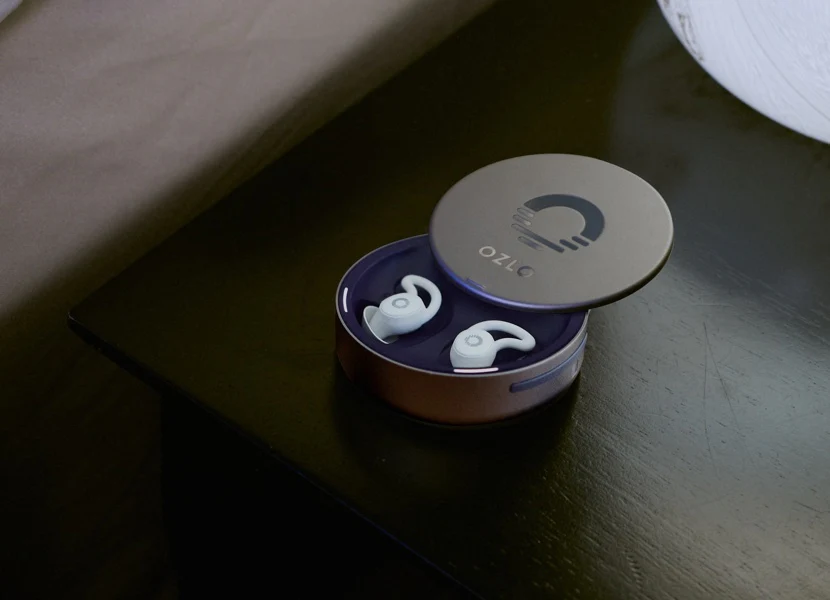
  • I Bought, and Returned, the Ozlo Sleepbuds

    I’ve gotten into the habit of falling asleep with my headphones in lately. And while I absolutely love my AirPods Pro 2, I don’t want to lose them in the bed if they fall out of my ears.

    While listening to an episode of Upgrade, Myke mentioned that he got the Ozlo Sleepbuds, and he likes them for a number of built-in sleep features (like having an alarm, automatically playing a designated sleep sound, and more). But they also have rubber tips that fix them securely in your ear, so they’re unlikely to fall out.

    I decided to pick up a pair and try them out…and boy was I disappointed.

    Let me get the good stuff out of the way real quick though.

    src: ozlosleep.com
  • You Don’t Need to Work Weekends.

    People who tell you that you need to work on weekends are liars. They need to work on weekends.

    I know that’s a spiky point of view. But it’s true. The people who are telling you need to work on weekends to be successful as a business owner are probably the same people who are trying to sell you something when “just” working on weekends isn’t helping.

    But if you care about anything other than work — if you have hobbies, or a family, or a life outside of what people pay you for — you don’t need to work on weekends.

    You can manage your time, streamline your work, and offload anything you don’t personally need to do.

    The biggest benefit of running your own business is you get to work on your own terms.

    And if you want to sacrifice personal relationships, family, and hobbies for the pursuit of being wealthy, you can do that.

    But you can make a respectable, comfortable income and still have a life outside of work.

    Last year was my best year financially in business, and I took more time off than ever.

    That’s an incredible success.

    Will I ever be as wealthy as Alex Hormozi? Not financially. That’s the trade-off I’ve decided to make.

    But I did get to hang out with my friends and family, and even went to a few weddings. And boy were they fun.

    That’s worth way more to me than a bank account with more money than I’d know what to do with.

  • 2025 Yearly Theme: Being Present

    If you have kids, or have ever been a kid, you know how exciting the anticipation of a huge event can be.

    Since November 1st — the day after Halloween — my kids have been excited about Christmas, entirely ignoring the Thanksgiving buffer.

    None were more excited that my oldest, who would do impressive math for a 7-year-old to figure out just how many days, events, sleeps, and school days there were until Santa came to visit.

    On the day we got our Christmas tree — November 29th — I reminded her: “Be present. Christmas is one day, but it’s up to us to enjoy the season, and all the activities we’re doing.”

    I felt like Qui-Gon Jinn telling Anakin to, “concentrate on the moment,” before the pod race.

    My point was that I didn’t want her to spend the entire Christmas season anticipating Christmas Day while mentally missing out on everything we were doing. From cutting down our tree, to Christmas concerts, baking cookies, visiting family, and everything else, there are many wonderful things about that time of the year.

    But I also realized something: I do a pretty bad job of concentrating on the moment. Instead, I worry about the future. Or I escape into my phone. Or my work.

    I try to address problems I worry will happen, and defer solutions to problems I need to address today.

    I need to follow the advice I gave my daughter. That’s why my Yearly Theme for 2025 is The Year of Being Present.

    But before we get into that, let’s grade my previous yearly theme: The Year of Control.