Podcast Do’s and Don’ts
As you start your podcast, you’ll be faced with tons of decisions to make, like format, topics, artwork, what kind of gear to buy, and more. here are some dos and don’ts to help make your journey a little smoother.
(more…)
As you start your podcast, you’ll be faced with tons of decisions to make, like format, topics, artwork, what kind of gear to buy, and more. here are some dos and don’ts to help make your journey a little smoother.
(more…)Time is also the only thing you can’t buy, or get more of. Do things that will save you time, and you will grow your business. I truly believe that and one of the best ways to find time is by automating the things you personally don’t have to do. There are lots of tools out there like Zapier, IFTTT, and Siri Shortcuts on iOS to make automating these fast and easy. Here are a few tips so you can start automating today.
(more…)Recently I got a question regarding creating an “episode 0” for your podcast – namely, “do I need an episode 0, and when should I do it?” The short answer is, you should do it as soon as you know you want to have a podcast. But let’s take a deeper look at Episode 0 and launching your podcast.
(more…)Over the weekend, I gave a talk at WordCamp Minneapolis about the things I’ve learned from nearly 100 guests on my podcast, How I Built It. I covered useful tools and great advice, as well as some recurring themes. Here are the highlights.
If I had to pick one thing I knew for certain my wife likes about me, it would be my inquisitive nature. She says it regularly. It’s because we’ll be talking about something and I’ll blurt out, “I wonder how that started,” or “Who do you think the first person to try that was,” or “I wonder if that’s because of <X>.” One of the reasons I love going to Disney World is because I like figuring out the Disney Magic. They push the limits of technology and engineering and I want to know how they got to those limits. But being inquisitive isn’t just about picking up fun facts or things to file away for pub quiz (or quizzo, or whatever it’s call near you). There are lots of ways being inquisitive has helped me, both personally and professionally.
When I first started freelancing, my resources were basically online discussion boards and people I knew in real life. I am eternally grateful for the people in my life who helped me get my business up and running, but since then, there’s been a bit of a revolution online. In 2018, it seems everyone is creating an online course. And not just great freelancers like Paul Jarvis or my friend Carrie Dils. Take a look at MasterClass.com. Judy Blum, Gordon Ramsey, and Steph Curry are all making courses on how to excel in their craft. And you can too.
Note: this is an update to an article I wrote in 2010, when I went from college to full time freelance.
I started freelancing all the way back in 2002, when my church came to me looking for a website. As a junior in high school, I used
Frontpage, and GMail had yet to grace me with it’s presence. And this seemed like a really good opportunity for me to run
the business I always wanted. I freelanced all through high school and college. It was at the end of my senior year in 2007
that I realized I wanted to keep doing it. So I went to grad school to learn more about my trade, and better prepare myself full time freelancer. I stuck with it for a time but sought full time employment for 6 years before coming back to self-employment.
So what does it take to transition to full time freelancing (from school or employment)? Let me tell you what I’ve learned.
Because I started freelancing at age 15, I would often struggle with what I would do after I graduated from college. I could start my own business and freelance full time, or I could get a “real” job. At one point, while I was in the throws of this existential crisis, my dad and I went to dinner with a family friend who happened to be starting his own business. This friend, who was close to my dad’s age with two kids of his own, offered me some advice. I, being the headstrong early 20-something male, promptly disregarded it. It wasn’t until I was towards the end of my 20s that I realized it was some of the best freelancing advice I never took.
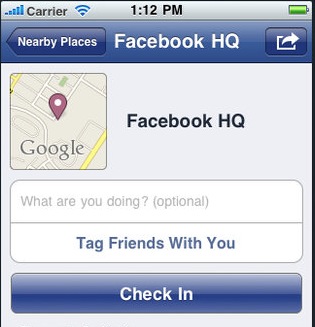 A couple of weeks ago Facebook announced the latest service in their social networking scheme, Places. It allows you to ‘check-in’ using your iPhone or the mobile web and post your location to your Facebook profile. You can also tag friends and see who is nearby. I asked my students- college freshmen- what they thought of Facebook Places and got some pretty good replies. Let’s take a look!
I started freelancing all the way back in 2002, when my church came to me looking for a website (which at the time I didn’t actually do- talk about divine intervention!). I was a junior in high school, I used Frontpage, and GMail had yet to grace me with it’s presence. I had always wanted to run a business and this seemed like a really good opportunity, so I went with it; I freelanced all through high school and college. It was at the end of my senior year in 2007 that I realized I wanted to keep doing it and went to grad school to learn more about my trade, and better prepare myself for freelancing in the real world. That however, turned out to be harder than I thought. I got my Masters Degree in May of 2009 and wasn’t quite prepared for the roll of full time freelancer. I stuck with it though, and am still freelancing full time. With college and high school graduation season coming to an end, I wanted to offer some advice for the student freelancers out there who want to take the post-grad full time plunge.
You want to build better systems, but you don’t know where to start. That ends today. Get 4 systems every solopreneur needs, the exact tools to create those systems, and automations + AI prompts and skills to get you to a calmer, more reliable business faster.

That ends today. The Solo Systems Starter Kit will give you 4 systems every solopreneur needs to run a less chaotic business, the exact tools to create those systems, and automations + AI prompts and skills to get you to a calmer, more reliable business faster.