school

  • 5 Things to Consider when Creating an Online Course

    Think about the last conversation you had via text or phone. Now think about the last conversation you had in person or via video. Consider the differences. How well were you able to pick up tone or meaning? Were there subtle communications you missed over the phone that you likely would have picked up in person? How much is lost when you’re not looking at the person you’re talking to.

    (more…)

  • The Web is Dead

    In Wired Magazine’s latest issue they proclaim, “The Web is Dead. Long Live the Internet.” I was pretty intrigued by this and decided to read the article (and subsequently subscribe to Wired. Well played, Wired). It’s divided into 2 parts, Blame Us (consumers) and Blame Them (corporations), and is very well written. I decided I’d have my students read it so we could discuss it in class; I wanted to get their perspective as college freshmen- people who have been using the Internet probably since 2003 or 2004 (age 11 or 12). I think it was around here that we really started to see the web change (MySpace was 2003, Facebook 2005), so it would be interesting since what we have today is the Internet as they know it. This will work  the same as the last class discussion on Facebook Places. I’ll pose my questions, write the class consensus, and then my thoughts.

    (more…)

  • Facebook Places

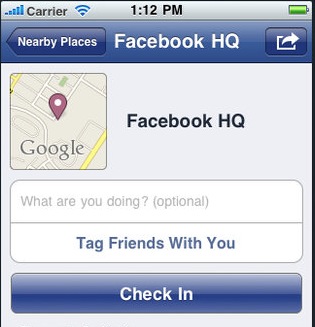
    A couple of weeks ago Facebook announced the latest service in their social networking scheme, Places. It allows you to ‘check-in’ using your iPhone or the mobile web and post your location to your Facebook profile. You can also tag friends and see who is nearby. I asked my students- college freshmen- what they thought of Facebook Places and got some pretty good replies. Let’s take a look!

    (more…)

  • Links Round Up for 08/22/10 [Back to School]

    Aside from that, a couple of notable news stories:

  • College Advice for my Brother

    Tomorrow, my youngest brother Robby is going away to college. While I’ve had 2 other brothers go away, this is different. He’s going to Florida Tech, which is the furthest away, and with no friends (an experience I didn’t have). I’d be lying if I said I wasn’t being a little protective, but I think this is sound advice for any incoming freshman, which is the reason I’m posting it here. So without further ado, here are some tips for going away to college.

    (more…)

  • What I Learned in College

    College Life

    Over at Nettuts, they’ve posted an article titled, “Should You Attend University for Web Development”. Reading the article, I found it pretty interesting that a lot of people feel college isn’t necessary for web development and that their schools are behind the times when it comes to web development. I’m not going to defend my school and say it’s totally up-to-date, because it’s not. I do feel however, that that’s the nature of the beast when dealing with web development and computer science in general. As I wind down in the Masters program, set to graduate in May, I can tell you these two things after six year of college: the CS program should not be about the what but the how, and college is just as much a social thing as it is an academic thing.

    First, let’s focus on the academics. Computing, no matter what your focus, is an ever changing field. It would be impossible for every school to stay on top of every technology is out there. I’m not being an apologist, I am speaking the truth. The idea should not be, “I’m learning C#,” or “I’m learning PHP.” It should be, “I’m learning how to program, using PHP.” I learned what Object Oriented Programming is and I can apply that to any language. I’ve learned the semantics of an imperative and a declarative language. I learned algorithms, and should be able to implement them as long as I know how certain language behaves, and I’ve learned how to teach myself that. Heck, my school doesn’t even have a web development major, and I consider myself a damn good web developer.

    Beyond that, you learn the social skills you should have whether your profession be computer scientist, web developer, engineer, etc. There is a huge focus in our program on team building and communication. Human interaction isn’t something Google can teach you (yet). In our Masters program (in Software Engineering) we learn about process, eliciting requirements, etc. While you can learn some of this stuff with experience, hearing about it in a classroom certainly expedites the process.

    But college isn’t just about academics. I will attribute a good amount of my social skills, professionalism, and 90% of my connections to going to college. I got involved in extracurriculars, networked, and made some amazing friends that challenged my way of thinking and got me to try new things. Again, that isn’t something you’re going to find on Google.

    College should not just be about teaching you X. It should teach you how to learn. You should get some leassons in being social. It should give you some experiences you can’t get anywhere else. Those who say, “I don’t need to go to college to be X,”  aren’t looking at the big picture and will never be the best at what they do.

  • Learning a new Skill

    Recently I took it upon myself to learn JQuery. I’m toying with the idea of a redesign of both this site and my company’s site, and would like to do some cool stuff. I’ve written before on learning a new programming language but not new skills in general. I’m a big fan of the “learn by doing” approach.

    The web is ubiquitous with tutorial sites (see envato for some great ones), which makes it easy to learn by doing. For JQuery, I will be doing one or two tutorials a week to get myself acquainted with it, then adapt what I learn to my own sites. This has worked well for me in the past- find good tutorials and it should be pretty easy (at least to learn the basics).

    The key is to find some good, linear resources for doing tutorials. While the web is good for finding a specific tutorial to do, if you’re just starting out you should start at the beginning. I’d recommend picking up a book for that. As far as they go, there is no be-all-end-all series for anything. For programming, I like the Absolute Beginner books. For Adobe products, the Classroom in a book series is very good; but it’s really up to you to find something you’re comfortable with.

    I’d say the hardest part is sticking with it. Learning something new can be time consuming and frustrating, especially when you have other things you need to do. However, once you do learn it you’ll be pretty happy you did. 

    Finally, I only touched on resources for computer-based skills because that’s what I know best. If you have some “real life” skill, like how to build a deck, feel free to leave how you learned in the comments!

  • Freelancing

    In the days approaching graduation, the number one question I was asked is, “What are you doing after?” Most of my friends were relaxing for some time and finding a job, a few had jobs lined up, and some were going to grad school. I fall in the third category. What exactly does that mean for me job wise for the summer now that I actually have a degree? Freelancing. I am finally at a point, I feel, where I can make freelancing my main source of income. I have grown a lot as a developer and a business man, and I actually have clients. More than one. While I have spoke about my business and some tips and advice, I have never talked about the subject of freelancing. Until today.

    As many of my friends know, I think this is the best thing anyone can do. Start your own business. Work for yourself. Do what you love to do and do it your way. My brother and friend are into photography- sell your pictures. Take pictures for people. My friend is a teacher- tutor on the side. Why not? Anyone going into the workforce I encourage to open their own firm. Working for myself is an amazing experience that has helped me grow as a person. I get to work with people to attain some goal or idea they have. I get to learn new things as I go along, and get paid to do it. With web design, I have a tangible product on the web that anyone can view whenever they want.

    So what do you do if you want to get into freelancing. Well for me it was a no-brainer. I was in high school and really had no expenses. I figured if people are willing to pay me to do what is essentially my hobby, why not. As I got older, I really started seeing value in my own work. It’s not just a hobby, it’s a commodity that people need and I am part of the few that can actually provide it. That is the most important lesson I’ve learned, and something anyone who wants to freelance should keep in mind. Do not short change yourself. I’ve spend a lot of time “cutting people breaks” and charging way less than I should have because I thought it was fun. I should have seen the value in my work. So that is the first thing you need to do to get into freelancing.

    There is a lot more I could cover here, and maybe I will. But for now, Freelance Switch has a nice write-up on the basics of freelancing.