
This one might ruffle some feathers, but I’m OK with that. I think we NEED to disclose the usage of AI in creative work more. It’s less about signaling that you cheated in some way — on the contrary, I don’t think using AI is de-facto cheating. It’s about honesty, integrity, and transparency.
So my policy is simple: if you use AI to write, record, or produce something, it should be disclosed in the same way affiliate links or paid promotion has to be disclosed.
And today, I explore why I feel so strongly about that.
If you’re in the northeast United States, you know you need to mow pretty much every week in the summer. But there was a point a few summers ago, due to rain, lack of child care, and travel, that I didn’t get mow my lawn for nearly 3 weeks.
So one day, I set out to mow the very long, still kind of wet lawn. On top of that, I had to weed wack, and take a hedge trimmer to some overgrown bushes. It was shaping up to be a big job. Something that normally takes an hour took an entire afternoon.
And because I was choosing yard work over billable work for my business, I lost income.
That was the last time I mowed my lawn.
I used to tell myself I was a video game completionist. That if I started something, I’d have to finish it.
Until a few years ago, I felt that way about books — if I started a book, I’d have to finish. And that’s stupid, right?
If I’m not enjoying a book, I should put it down — my time is too limited for me to waste it on media I’m not enjoying.
Over the holiday break, I wanted to dedicate some time to playing a video game. My friend Austin recommended Immortals: Fenyx Rising, which I loved.
But here’s the thing: I knew I wasn’t going to finish it, and I didn’t care.
I thought this was some break from my normal approach — that before kids, I’d have to finish the game.
But that was only really true with Star Wars games because I was interested in the story. Every other game, I’d abandon when it got hard or was no longer fun for me.
I realized the games I really like these days are open world, complete missions when you want, or just run around have fun for a bit. It’s very similar to the “run and gun” games I liked in my 20s.
This has made video games much more enjoyable for me again — it’s no longer a chore I feel I need to do. It’s something I can do, with my kids, to decompress.
There’s a lot of stuff like that in my business too — and probably yours. Things you told yourself you have to do, for whatever reason.
I’m getting ready to speak at Podfest tomorrow, and I’m challenging the audience to shift that mindset. I want to extend that challenge to you too.
What’s something you tell yourself you’ve “always” done, that you either no longer do, or don’t have to do?
How can that improve your process, free up your time, and make what you’re doing no longer feel like a chore?
Imagine this: you’re in a new town, and you’re looking for a place to eat — not a franchise, but something local.
It just so happens that a bunch of people you know live, or have lived in this town — people who understand what you like and don’t like (what’s important to you, and your general financial and dietary situation).
In looking for a place to eat, which of these would sway your opinion more:
For most people, it’s going to be recommendations from their friends, right? For all the reasons I listed above.
Strangers don’t know you, so they’ll basically just tell you their favorite restaurant.
Google and other search engines don’t know you personally. They rely on averages and a different set of signals.
I’m speaking at Podfest later this week and I noticed something interesting about the schedule: there are at least a dozen talks on how A.I. can help you with your podcast.
But as far as I can tell, there’s only one talk on using analytics to measure the success of your podcast.
Halfway through writing nearly 24 articles for my Podcast Advent project, I started to wonder if I was wasting my time. Is this worth it? Am I writing what people actually want to read?
You’ve probably fallen into the same trap: spending hours creating content, unsure if it’s resonating with anyone. It’s frustrating, exhausting, and can feel like shouting into the void. But it doesn’t have to be this way.
Today, we’re exploring a few things you can try to come up with content that resonates with your audience — plus I’ll tell you about my GAPS framework for content in 2025.
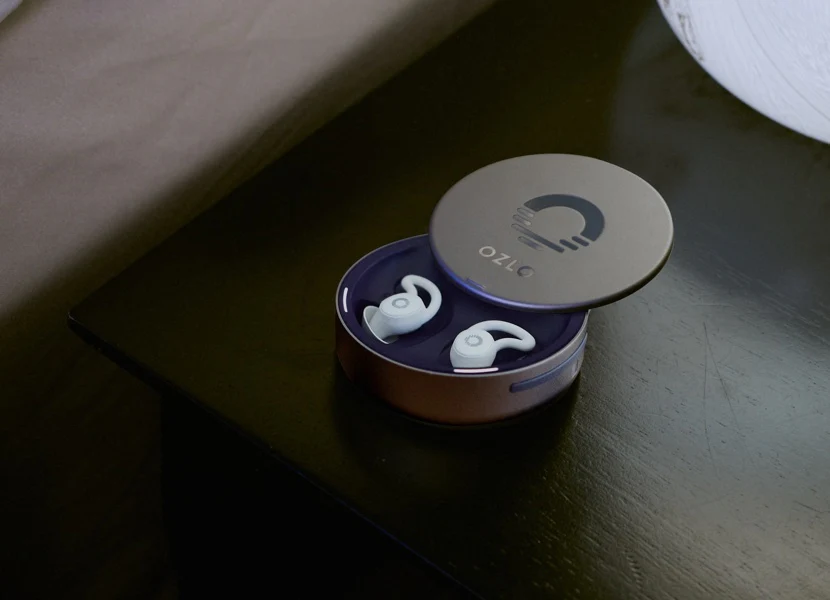
I’ve gotten into the habit of falling asleep with my headphones in lately. And while I absolutely love my AirPods Pro 2, I don’t want to lose them in the bed if they fall out of my ears.
While listening to an episode of Upgrade, Myke mentioned that he got the Ozlo Sleepbuds, and he likes them for a number of built-in sleep features (like having an alarm, automatically playing a designated sleep sound, and more). But they also have rubber tips that fix them securely in your ear, so they’re unlikely to fall out.
I decided to pick up a pair and try them out…and boy was I disappointed.
Let me get the good stuff out of the way real quick though.
People who tell you that you need to work on weekends are liars. They need to work on weekends.
I know that’s a spiky point of view. But it’s true. The people who are telling you need to work on weekends to be successful as a business owner are probably the same people who are trying to sell you something when “just” working on weekends isn’t helping.
But if you care about anything other than work — if you have hobbies, or a family, or a life outside of what people pay you for — you don’t need to work on weekends.
You can manage your time, streamline your work, and offload anything you don’t personally need to do.
The biggest benefit of running your own business is you get to work on your own terms.
And if you want to sacrifice personal relationships, family, and hobbies for the pursuit of being wealthy, you can do that.
But you can make a respectable, comfortable income and still have a life outside of work.
Last year was my best year financially in business, and I took more time off than ever.
That’s an incredible success.
Will I ever be as wealthy as Alex Hormozi? Not financially. That’s the trade-off I’ve decided to make.
But I did get to hang out with my friends and family, and even went to a few weddings. And boy were they fun.
That’s worth way more to me than a bank account with more money than I’d know what to do with.
I had a friend who would always announce they’re “about” to do “something,” without ever saying what it was. But before they did it, they’d announce something different, repeating the cycle of announcing and never doing.
They’d just be thrashing, hoping to find something that worked before it even had a shot at working.
Every so often I worry I do this — change directions too often, before a strategy can really take root to determine if it works.
But I’m conflicted because I also don’t want to keep doing the same thing if it’s not working.
In reflecting on 2024, I realized that I’ve done a poor job at positioning myself in a way that I can truly help solopreneurs who have podcasts.
Part of it is that I was thrashing a little bit. I was offering too many products and services that fit the bill of, “Sure, I can help you” vs. “This is the thing I really want to be known for.”
This worked out OK for my bottom line, but inhibited my growth.
If you have kids, or have ever been a kid, you know how exciting the anticipation of a huge event can be.
Since November 1st — the day after Halloween — my kids have been excited about Christmas, entirely ignoring the Thanksgiving buffer.
None were more excited that my oldest, who would do impressive math for a 7-year-old to figure out just how many days, events, sleeps, and school days there were until Santa came to visit.
On the day we got our Christmas tree — November 29th — I reminded her: “Be present. Christmas is one day, but it’s up to us to enjoy the season, and all the activities we’re doing.”
I felt like Qui-Gon Jinn telling Anakin to, “concentrate on the moment,” before the pod race.
My point was that I didn’t want her to spend the entire Christmas season anticipating Christmas Day while mentally missing out on everything we were doing. From cutting down our tree, to Christmas concerts, baking cookies, visiting family, and everything else, there are many wonderful things about that time of the year.
But I also realized something: I do a pretty bad job of concentrating on the moment. Instead, I worry about the future. Or I escape into my phone. Or my work.
I try to address problems I worry will happen, and defer solutions to problems I need to address today.
I need to follow the advice I gave my daughter. That’s why my Yearly Theme for 2025 is The Year of Being Present.
But before we get into that, let’s grade my previous yearly theme: The Year of Control.
(and use it to your advantage instead)
Join hundreds of business owners who are building simple, powerful systems through automation.