
Accidental Coaching on Storytelling
In last week’s members-only episode of How I Built It, I end up accidentally coaching my guest, Tanya, for 20 minutes on storytelling. It’s a really good conversation about what makes a good story — ?become a member if you want to hear it?.
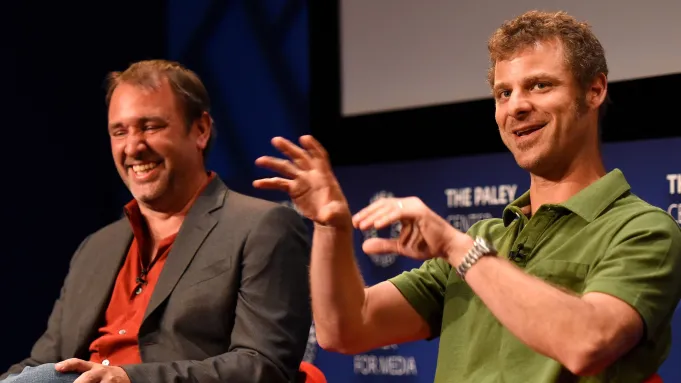
One thing I mentioned to her later — when she was trying to figure out her story — was something Trey Parker and Matt Stone (the guys who created South Park) said about storytelling.
Most people just tell their story as a series of events, almost like a kid telling you about their day. “I needed money, then I started a business and got my first client. Then I got more.”
There’s no emotional charge in those sentences. Why did you need money? How did you get that first client? Instead, Parker and Stone recommend this:
? Don’t connect story beats with “and then” — you’re just listing a series of seemingly unconnected events.
? Connect story beats with “but” or “therefore” — now you’re connecting them with purposed.
Here’s that first story again, with connected story beats: “I knew if I was going to provide for my family, I’d need something more than this dead-end job, therefore I started a business. I was really struggling to find my niche, but someone reached out to me and asked a crystalizing question that made my niche clear — that’s when I got my first client. We had a great relationship, I was really able to deliver for her, and she provided a great testimonial. Therefore, I was able to get more clients in that niche. Now, my business is thriving, and I’ve tripled what I was making at that dead-end job.”
This also fits perfectly into 3-Act structure:
- Setup (I needed to provide for my family)
- Confrontation (I was struggling to get clients)
- Resolution (I’ve tripled my salary).
As you creator your content (through writing, podcasting, or even guesting), you should consider the stories you’re telling. How do they connect back to your point, and are you taking the audience on a journey with you?
That’s how your stories will stick, and people will remember what you had to say.